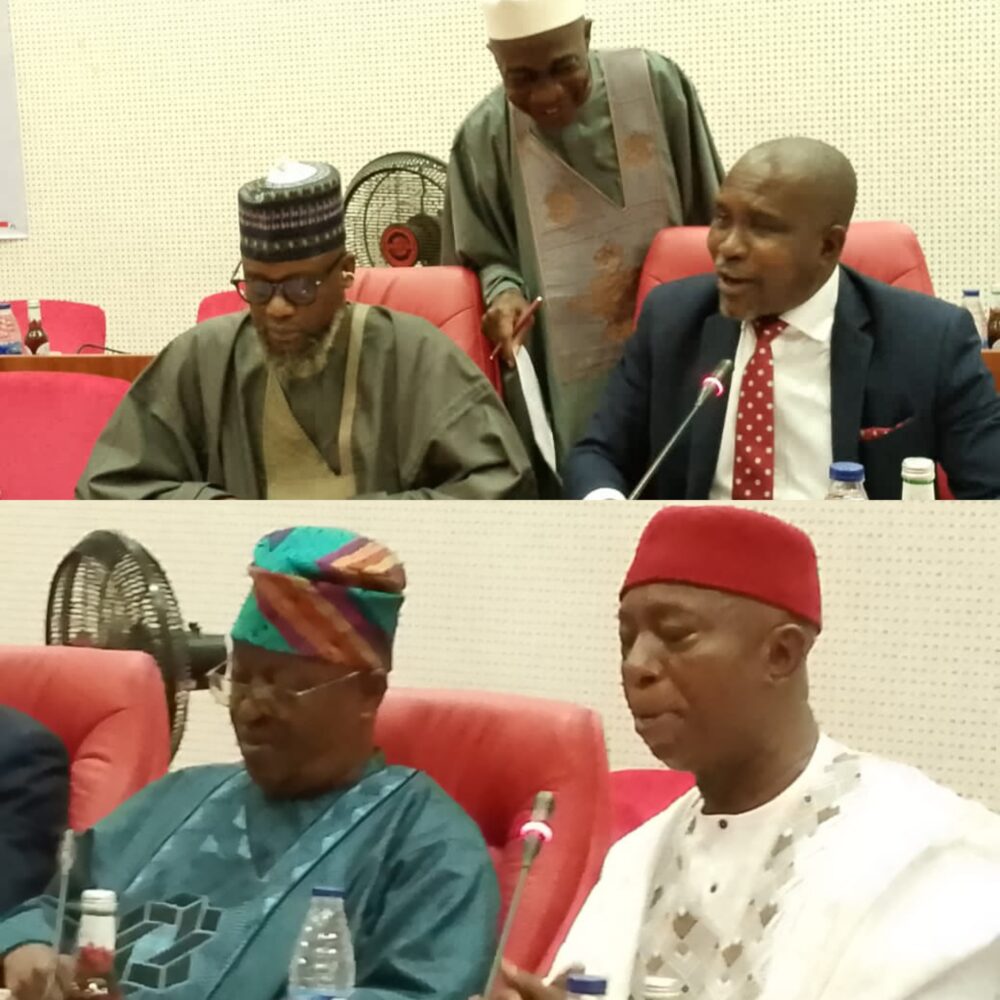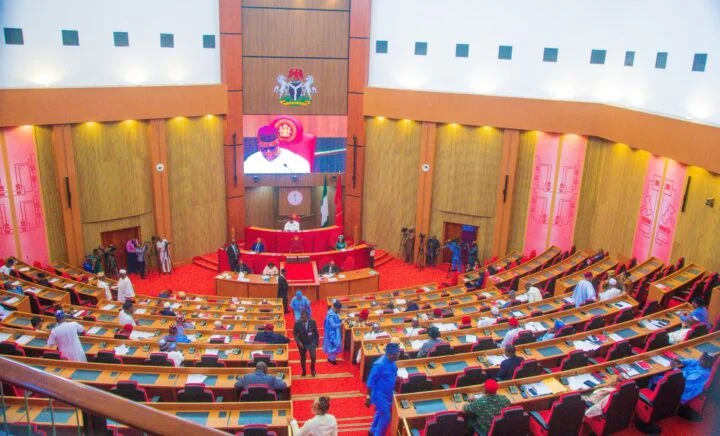
The Senate has issued a stern warning to Ministries, Departments and Agencies (MDAs) as well as Government-owned Enterprises (GOEs), declared that continued refusal to honour invitations from the National Assembly will attract constitutional sanctions.
The warning followed the adoption of a motion sponsored by Senator Sani Musa over the persistent failure of several government agencies to appear before Senate Committees despite repeated invitations.
Relying on Sections 88 and 89 of the 1999 Constitution (as amended), the Senate reaffirmed that the National Assembly is constitutionally empowered to conduct investigations and exercise oversight over MDAs, Government-owned Enterprises, and other institutions entrusted with the management of public funds.
As part of its resolutions, the upper legislative chamber directed all MDAs and GOEs to comply promptly with invitations issued by the Senate and its Committees whenever required, stressing that legislative oversight is a constitutional obligation designed to promote transparency, accountability, and good governance.
The Senate also urged the Secretary to the Government of the Federation (SGF), Senator George Akume, the Head of the Civil Service of the Federation, Mrs. Didi Esther Walson-Jack, and supervising ministries to ensure that agencies under their supervision fully comply with invitations from the National Assembly.
Furthermore, the Clerk of the National Assembly was directed to formally communicate the Senate’s resolution to all MDAs, GOEs, the SGF, the Head of the Civil Service, and other relevant authorities for immediate implementation.
The Senate maintained that effective legislative oversight is essential to safeguarding public resources, strengthening the integrity of public institutions, and ensuring that government agencies remain accountable to the Nigerian people.
It emphasised that oversight is not intended to create confrontation between the legislature and the executive but to uphold transparency, accountability, and the public trust that forms the foundation of Nigeria’s democratic governance.