
Nigeria’s security crisis has once again moved beyond the battlefield into the arena of politics, accountability and public trust.
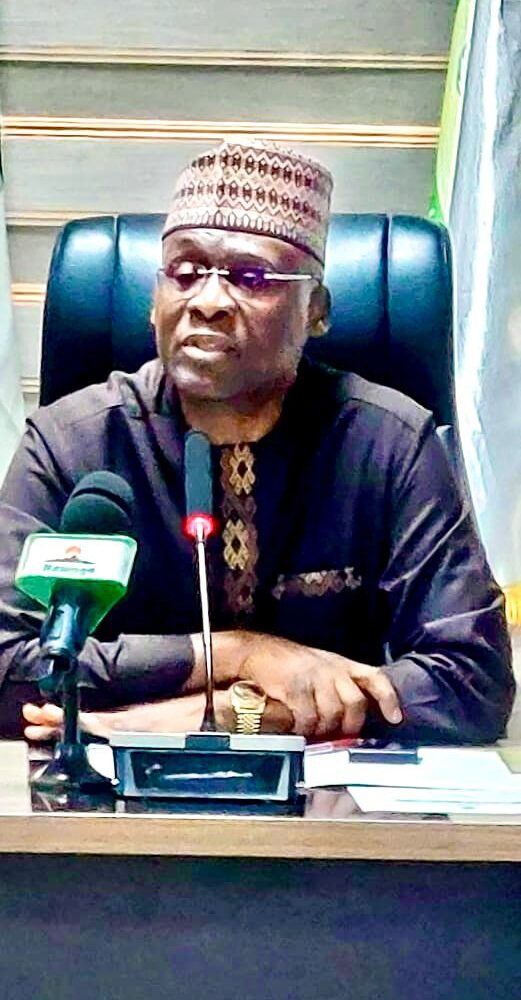
The latest controversy involving Senator Ali Ndume and Borno South Youth Alliance President, Samaila Kaigama, has reopened one of the most uncomfortable questions in Nigeria’s fight against terrorism:
Who is truly benefiting from insecurity?
This is no longer merely a disagreement between two individuals. It is an issue that strikes at the heart of Nigeria’s national security architecture.
Kaigama alleged that Senator Ali Ndume acted as the lead intermediary in negotiations for the release of hundreds of abducted women and children from Ngoshe in Borno State. He further alleged that money raised for the operation was tampered with.
Senator Ndume has categorically denied the allegations. According to him, he never negotiated with terrorists, never handled ransom payments, and merely alerted the National Security Adviser, the DSS and the military after receiving information about the abduction. He has also welcomed a full investigation, insisting that all parties be invited to establish the truth.
The question therefore is no longer simply whether Ndume is guilty or innocent.
The bigger constitutional and national question is: How has Nigeria reached a stage where private citizens, politicians and community leaders are repeatedly linked with negotiations involving terrorists?
Ordinarily, negotiations involving terrorists, kidnappers or insurgents should remain exclusively within the jurisdiction of the Nigerian security services.
When elected politicians, community leaders or private citizens become central figures in rescue negotiations, it suggests that citizens may have lost confidence that the State alone can secure the release of victims.
That, in itself, represents a serious institutional challenge.
Whether such individuals are acting from compassion or necessity is a matter that only investigations can determine.
Kaigama has made grave allegations.
Ndume has strongly denied them.
Neither accusation nor denial should substitute for evidence.
The only institution capable of determining the truth is an independent investigation involving the military, DSS, the Office of the National Security Adviser, the police and other relevant agencies.
If Kaigama possesses evidence, it should be produced, and If Ndume’s account is accurate, an investigation should clear his name. Justice requires due process, not trial by media.
The Bigger Question: Is Insecurity Becoming an Industry?
Perhaps the most disturbing aspect of Nigeria’s insecurity is the growing perception that too many interests benefit from its continuation. Whenever insecurity persists for years despite huge defence budgets, citizens naturally begin asking difficult questions.
Some wonder whether terrorists alone are responsible. Others suspect political actors exploit insecurity for electoral advantage.
Still others question whether corruption within government institutions weakens security operations. These questions do not amount to proof. However, they underline a serious crisis of public confidence that government must address through transparency and measurable results.
Under Section 14(2)(b) of the Constitution of the Federal Republic of Nigeria, the security and welfare of the people shall be the primary purpose of government.
This constitutional obligation cannot be delegated. Whether insecurity is caused by terrorists, criminal gangs, informants, corrupt officials or collaborators, government bears the ultimate responsibility for identifying, prosecuting and dismantling those networks.
Politicians must also be transparent. Public office comes with enormous responsibility.Whenever allegations connect elected officials with terrorism-related negotiations, transparency becomes essential.
Even where intentions are humanitarian, public confidence requires openness. Any involvement outside established security protocols risks creating suspicion and undermining confidence in state institutions.
Terrorism thrives on collaboration, no terrorist organisation survives in complete isolation. History shows that insurgent groups often depend on collaborators who may include financiers, informants, logistics suppliers or corrupt officials.
This does not mean every allegation is true. It simply means that security agencies must continually identify and dismantle every support network that enables terrorism to survive.
HallowMace Position.
HallowMace believes that the Ndume-Kaigama controversy should not be reduced to political exchanges or media sensationalism. Instead, it presents an opportunity for Nigeria to answer critical questions:
1. Who negotiates with terrorists?
2. Under what legal authority are such negotiations conducted?
3. Were any public or private funds involved?
4. Were established security agencies fully informed?
5. Are there hidden networks benefiting from prolonged insecurity?
Only a transparent and independent investigation can provide credible answers.
Nigeria’s greatest enemy is not merely terrorism, It is impunity. If allegations are ignored, public trust erodes. If innocent persons are falsely accused without consequence, justice suffers. If guilty persons escape accountability, insecurity deepens.
Senator Ali Ndume has called for an investigation.
That call should be embraced, not because it will necessarily prove guilt or innocence, but because Nigeria deserves the truth.
Ultimately, defeating terrorism requires more than military operations. It demands transparency, accountability, effective intelligence, strong institutions and the political will to ensure that no individual regardless of status is above investigation when national security is at stake.
Amb. Anderson Osiebe, Executive Director, HallowMace Africa, Public Policy Expert and an Administrator writes from Abuja-Nigeria.