The Federal Government has commended Nigerian health professionals in the diaspora for their significant contributions to improving healthcare delivery across the country through the 2026 Nigeria Diaspora Health Impact Initiative (NDHII), which has benefited nearly 10,000 Nigerians.
Minister of State for Health and Social Welfare, Dr. Iziaq Adekunle Salako, gave the commendation at the 2026 National Diaspora Merit Award Dinner and Closing Ceremony of the Diaspora Health Impact Initiative held at the Banquet Hall of the State House, Abuja.
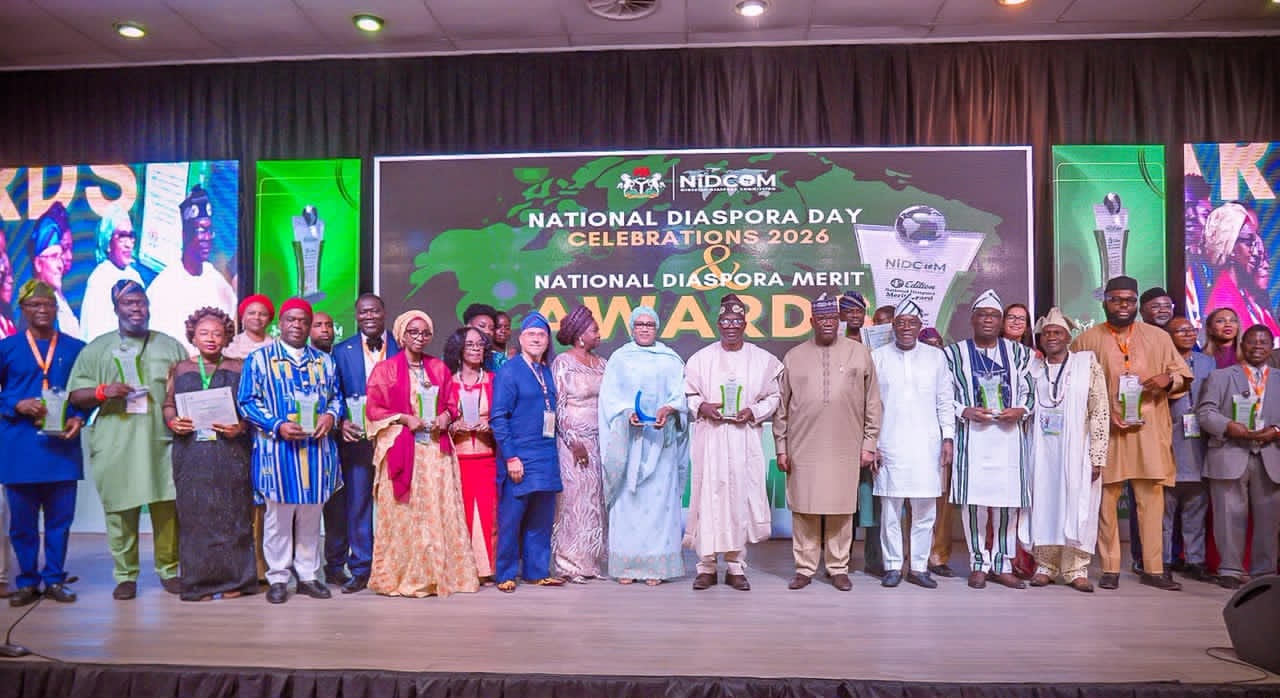
Salako described the initiative as a remarkable demonstration of patriotism and a practical example of how the expertise of Nigerians abroad can accelerate the transformation of the nation’s health sector.
He praised thousands of Nigerian healthcare professionals who voluntarily returned from different parts of the world to provide specialist medical care, perform surgeries, mentor local healthcare workers and strengthen health systems across the country.
According to the Minister, diaspora medical teams from organisations including the Canadian Association of Nigerian Physicians and Dentists (CANPAD), Medical Association of Nigerians Across Great Britain (MANSAG), Association of Nigerian Physicians in the Americas (ANPA), Nigerian Australian Medical Doctors Association (NAMDA), Nigerian Doctors Forum South Africa, Nigerian Medical Association Germany, Nigerian Nurses Charitable Association UK and the Concerned Medics Foundation carried out healthcare interventions in all six geopolitical zones.
Salako disclosed that the initiative directly impacted nearly 10,000 Nigerians through medical consultations, specialist surgeries, diagnostic services, telemedicine, sickle cell screening and other interventions, while more than 2,000 frontline healthcare workers received training to enhance the country’s healthcare capacity.
He highlighted major achievements of the programme, including the training of over 1,000 frontline health workers in the Safer Births Bundle of Care across Kano, Kaduna and Sokoto States, more than 4,000 medical consultations and over 500 surgeries in Enugu, Imo and Abia States, as well as advanced interventional radiology, neurosurgery and endoscopy procedures in Lagos.
Other interventions included ultrasound-based diagnosis training for endometriosis in Edo State and expanded telemedicine and primary healthcare services in the Federal Capital Territory and Nasarawa State.
The Minister reaffirmed the Federal Government’s commitment to strengthening collaboration with Nigerians in the diaspora by simplifying licensing procedures, facilitating locum arrangements, supporting customs and visa waivers for medical missions, and encouraging investments in hospitals, diagnostic centres and pharmaceutical industries.
He noted that despite the migration of healthcare professionals over the years, the Tinubu administration is implementing reforms under the Renewed Hope Agenda aimed at improving healthcare financing, infrastructure, workforce welfare and professional development while fostering stronger partnerships with Nigerians abroad.
Salako also called for sustained collaboration beyond annual medical missions through telemedicine, digital health, structured training partnerships, joint clinical research, technology transfer, public-private partnerships and diaspora-led investments.
He urged healthcare professionals living abroad to register on the newly launched Nigerians in Diaspora Advanced Health Programme (NiDAH) Portal and the Diaspora Health Registry, describing the platform as a structured gateway for diaspora professionals to contribute to Nigeria’s healthcare development.
The Minister further stressed that the country’s health system would continue to grow stronger through sustained collaboration between Nigerians at home and those in the diaspora.
He also commended the Chairman and Chief Executive Officer of the Nigerians in Diaspora Commission (NiDCOM), Hon. Dr. Abike Dabiri-Erewa, her team, members of the joint planning committee, state governments and development partners for the successful implementation of the initiative.