

The Federal Government has intensified efforts to revive Nigeria’s Cotton, Textile and Garment (CTG) industry with the successful production of 10,000 made-in-Nigeria T-shirts under a six-month pilot scheme aimed at reducing dependence on imported textiles.
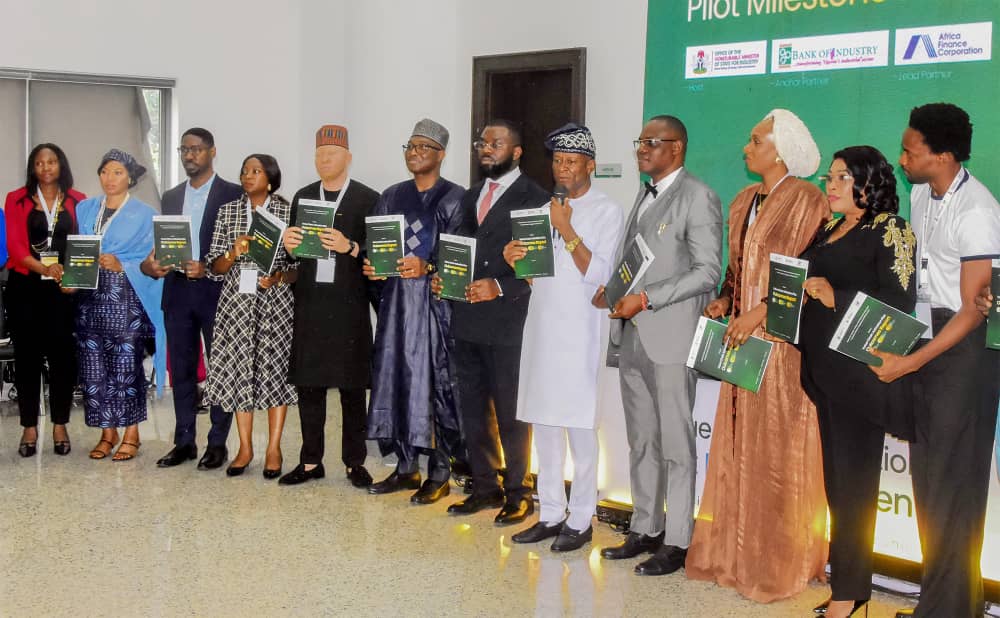
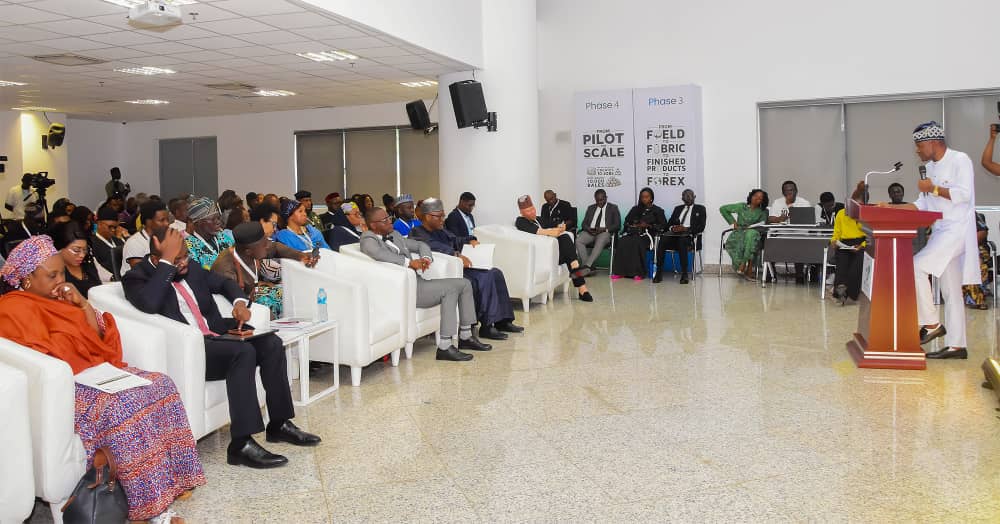
The initiative, implemented through the National Cotton, Textile and Garment Industrial Transformation Programme (NCTG-ITP), was unveiled during the Phase I Showcase and Stakeholder Working Session held on Wednesday in Abuja.
Speaking at the event, the Minister of State for Industry, Senator John Owan Enoh, described the programme as a major step toward repositioning Nigeria’s textile sector as a key driver of industrial growth, employment generation and export competitiveness.
Enoh said the pilot project had demonstrated Nigeria’s ability to transform locally grown cotton into globally competitive garments within six to seven months, stressing that the country possesses the production capacity, technical skills and market potential needed to rebuild the once-thriving textile industry.
According to the minister, the major challenge confronting the sector has been poor coordination across the value chain rather than lack of finance or infrastructure.
“Our biggest challenge has not been finance or infrastructure alone, but coordination across the value chain,” he said, noting that the government was strengthening policy support for farmers, manufacturers and investors through strategic partnerships with institutions such as the Bank of Industry and the Bank of Agriculture.
Also speaking, the Permanent Secretary of the Federal Ministry of Industry, Trade and Investment, Dr. Chris Osa Isokpunwu, described the initiative as a strategic intervention designed to drive industrial revitalisation, economic diversification and large-scale job creation.
He said the CTG sector has the potential to create more than 1.5 million jobs, especially for women and youths, while boosting Nigeria’s competitiveness under the African Continental Free Trade Area (AfCFTA).
Director of Industrial Development, Olumuyiwa Ajayi, stated that the framework would promote investment inflow, improve policy consistency, deepen local value chains and expand opportunities for small and medium-scale enterprises through technology adoption, skills development and market access.
Delivering an overview of the pilot scheme, the Special Adviser on CTG to the Minister, Eme Bassey, disclosed that the project successfully produced 10,000 high-quality T-shirts using locally sourced cotton at costs competitive with imported alternatives.
Development partners and financial institutions also pledged support for the revival of the textile industry.
Managing Director of the Bank of Agriculture, Ayo Shotirin, reaffirmed the bank’s commitment to supporting farmers and businesses across the CTG value chain, while Philbert Johnson of the United Nations Industrial Development Organization (UNIDO) stressed that Nigeria’s industrial transformation could be achieved through stronger collaboration, investment partnerships and sustained policy support.
The programme formed part of the Federal Government’s broader industrialisation agenda aimed at reducing import dependence, strengthening local manufacturing and creating sustainable economic opportunities across the country.