

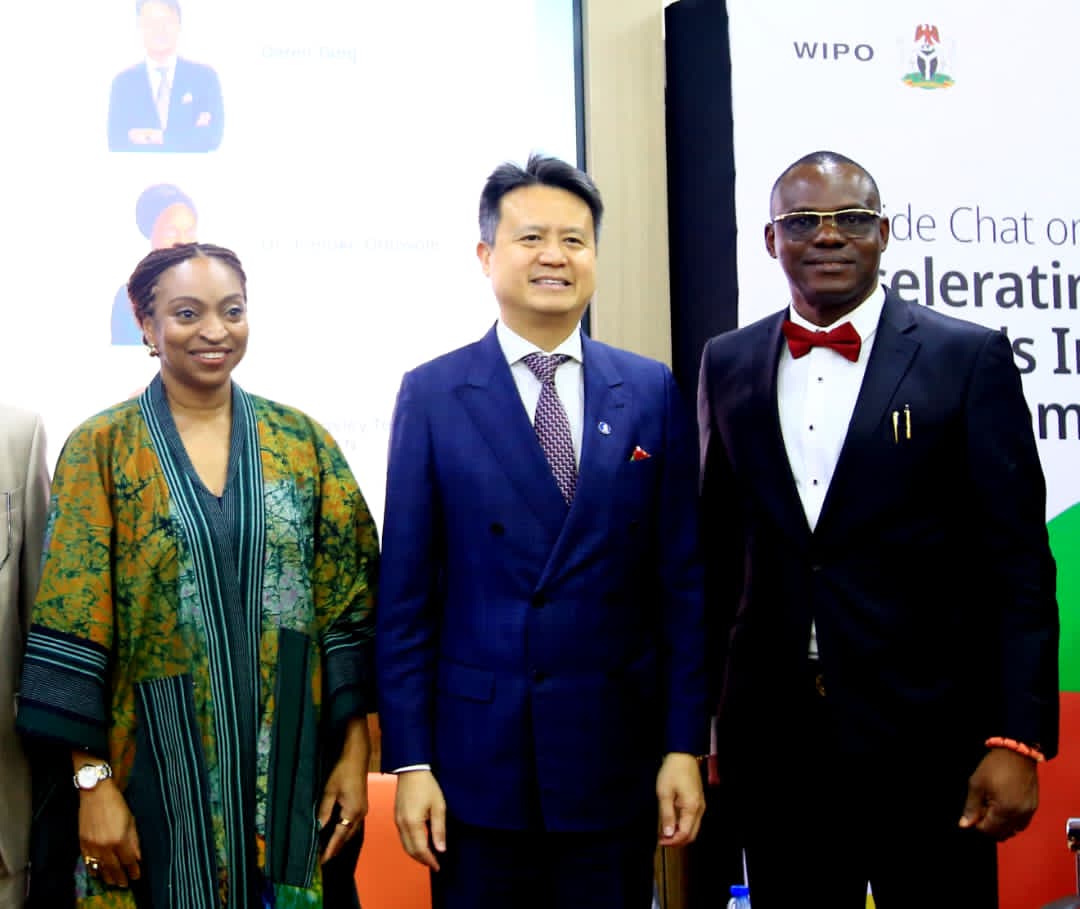
Nigeria has achieved a major milestone in its innovation and intellectual property landscape with the official launch of the Abuja office of the World Intellectual Property Organization (WIPO), the first such office to be established in Sub-Saharan Africa.
The landmark event, held at the United Nations House in Abuja, brought together government officials, international development partners, innovation stakeholders, entrepreneurs, and industry leaders for a high-level roundtable on strengthening Nigeria’s innovation ecosystem and accelerating the commercialization of intellectual property (IP).
Speaking at the event, the Honourable Minister of Industry, Trade and Investment, Dr. Jumoke Oduwole, reaffirmed the Federal Government’s commitment to positioning intellectual property, innovation, and commercialization at the heart of Nigeria’s economic transformation agenda.
She noted that the implementation of Nigeria’s National Intellectual Property Policy and Strategy has moved beyond policy formulation to practical execution through strategic partnerships involving government agencies, the private sector, and international institutions.
According to the Minister, WIPO’s decision to establish its first Sub-Saharan African office in Nigeria reflects growing international confidence in the country’s thriving creative, technology, manufacturing, and innovation sectors. She added that the new office would provide greater opportunities for capacity development, access to financing, specialized training, and stronger protection of intellectual property rights for Nigerian innovators and businesses.
Director General of WIPO, Daren Tang, described Nigeria as one of the world’s fastest-rising hubs of creativity and innovation. He highlighted the country’s globally acclaimed music and film industries as well as its rapidly expanding ecosystem of more than 3,000 technology startups.
Tang emphasized that intellectual property has emerged as one of the most valuable assets in the modern knowledge economy, enabling ideas, brands, inventions, and creative works to generate sustainable economic value. He identified six strategic opportunities for Nigeria, including leveraging IP as a financial asset, commercializing research outputs and university innovations, strengthening the national innovation ecosystem, supporting creative industries through stronger copyright protection, equipping young people with entrepreneurial and innovation skills, and helping small and medium-sized enterprises protect and monetize their innovations.
Also speaking, the Permanent Secretary of the Federal Ministry of Industry, Trade and Investment, Dr. Chris Osa Isokpunwu, underscored the need for an inclusive innovation ecosystem capable of attracting investment, creating employment opportunities, and driving sustainable economic growth.
The United Nations Resident Coordinator in Nigeria, Mohamed Malick Fall, described the establishment of the WIPO Nigeria Office as timely and strategic, noting that effective intellectual property systems are critical to unlocking Africa’s vast creative and innovation potential, particularly among young people and women.
Participants at the roundtable agreed that strong intellectual property protection must be complemented by effective commercialization frameworks to enable innovators, entrepreneurs, researchers, and creators to transform ideas into globally competitive products and services.
Stakeholders expressed optimism that the establishment of the WIPO Nigeria Office would usher in a new era of innovation-driven growth, positioning intellectual property as a catalyst for wealth creation, investment attraction, job generation, and national development.
The opening of the Abuja office mark a significant step in Nigeria’s ambition to become a leading innovation hub in Africa while strengthening its role in the global knowledge economy.