
Nigeria has reaffirmed its commitment to implementing the Africa Health Workforce Investment Forum Charter, while calling for a new global compact on health workforce mobility to address the growing migration of healthcare professionals from developing countries.
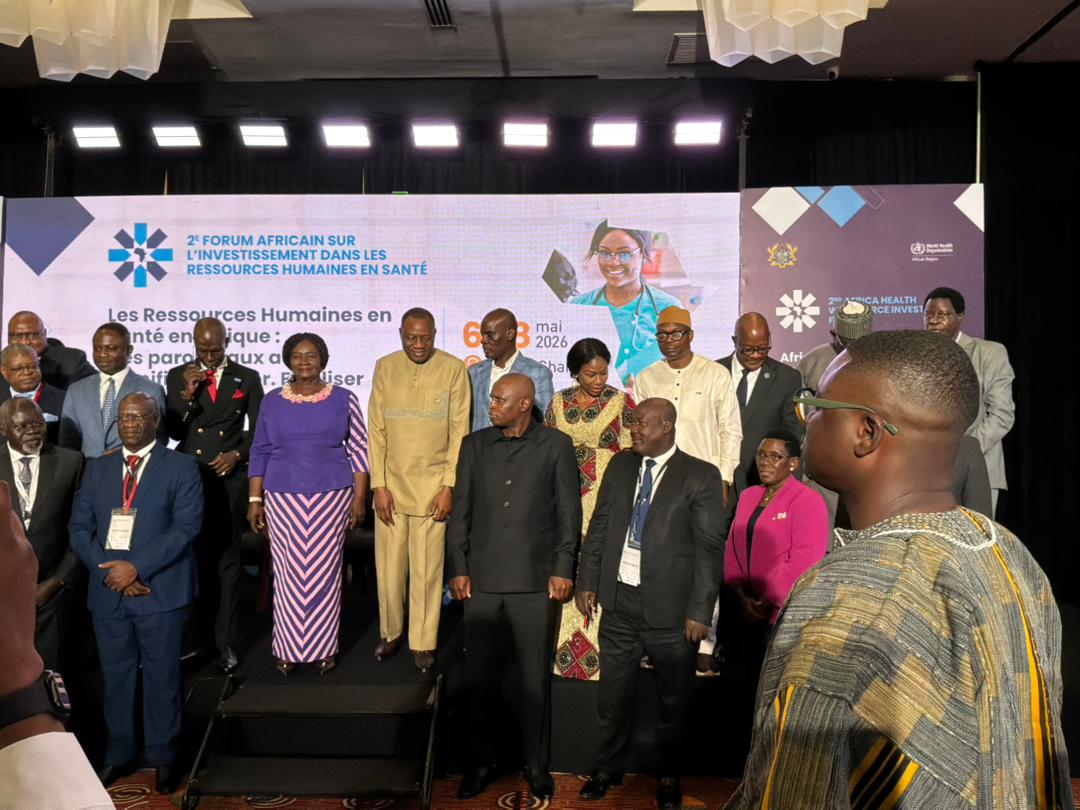
The Minister of State for Health and Social Welfare, Iziaq Adekunle Salako, made the declaration during the 2nd Africa Health Workforce Investment Forum held between May 6 and 8, 2026, at the Marriott Hotel.
Speaking at the forum, Salako said Nigeria was ready to demonstrate its commitment to the Africa Health Workforce Investment Charter through deliberate policy reforms, increased investment and stronger accountability mechanisms.
He stressed the urgent need for greater investment in Africa’s health workforce, describing inadequate financing as one of the biggest obstacles to achieving Universal Health Coverage (UHC) across the continent.
According to him, although Africa’s health worker density rose from 11 per 10,000 people in 2013 to 27 per 10,000 in 2024, projections indicate that the continent could still face a shortfall of 6.1 million health workers by 2030 if current trends persist.
Salako disclosed that the Federal Government approved the National Policy on Health Workforce Migration in August 2024 to address the increasing exodus of healthcare professionals from the country.
He explained that the policy focuses on ethical recruitment, bilateral agreements, diaspora engagement, retention incentives and rural deployment, in line with the World Health Organization Global Code of Practice on International Recruitment of Health Personnel.
The minister also highlighted ongoing reforms under President Bola Ahmed Tinubu, including the Health Sector Renewal Investment Initiative targeting about 900 million dollars in health sector investments between 2024 and 2026.
He said the initiative is aimed at strengthening primary healthcare infrastructure, expanding training capacity and deploying more community health workers nationwide.
Salako further revealed that Nigeria had completed its National Health Workforce Country Profile and established the National Health Workforce Registry with technical support from the WHO, while a Health Labour Market Analysis is ongoing to support the country’s investment compact under the Africa Health Workforce Investment Charter.
According to him, training quotas in health institutions have been increased to bridge workforce gaps, while over 70,000 frontline health workers have already been retrained under the Primary Health Care workforce strengthening initiative, with a target of 120,000 personnel.
On health workforce migration, Nigeria proposed a managed migration framework with clearly defined terms and performance indicators to ensure destination countries contribute to training investments in source countries.
Salako argued that the current system, where low-income countries bear the cost of training health professionals while high-income nations benefit from their expertise, is unsustainable and unfair.
He advocated bilateral and multilateral agreements that would include compensation for source countries, joint training programmes, circular migration pathways and investments in healthcare training infrastructure.
Nigeria also called for the introduction of an annual Africa Health Workforce Scorecard to track graduate-employment ratios across African countries.
The minister expressed concern over challenges confronting Africa’s health sector, including a sharp decline in Overseas Development Assistance between 2021 and 2025, rising public health emergencies and high unemployment among skilled health professionals despite widespread workforce shortages.
He noted that a 43 per cent increase in employment investment would be required to tackle the 27 per cent unemployment rate among qualified health workers in Africa.
Salako also urged African countries to meet the 15 per cent health budget benchmark under the Abuja Declaration, noting that only Rwanda, Botswana and Cabo Verde have achieved the target so far.