
The Nigerian Navy has commenced activities marking its 70th anniversary celebration, with senior naval officers highlighting the force’s transformation from a modest coastal defence outfit into a leading maritime security institution in Africa.
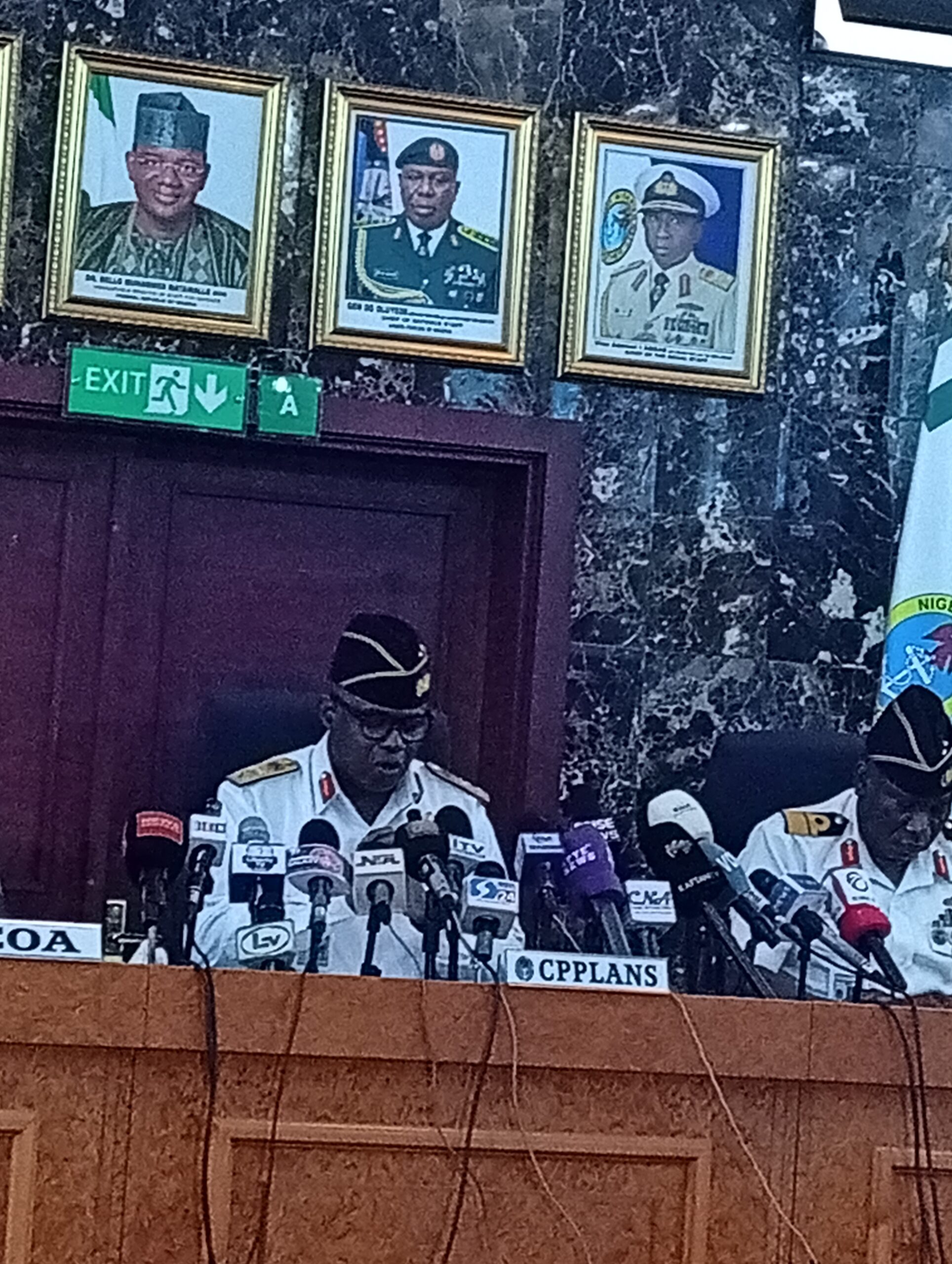
Chief of Policy and Plans, Rear Admiral Akintola Olatunde Olutunde, disclosed this while briefing journalists at the International Press Briefing marking the 70th Anniversary of the Nigerian Navy, held at the Vice Admiral DJ Ezeoba Hall, Naval Headquarters, Abuja, on Thursday, May 21, 2026.
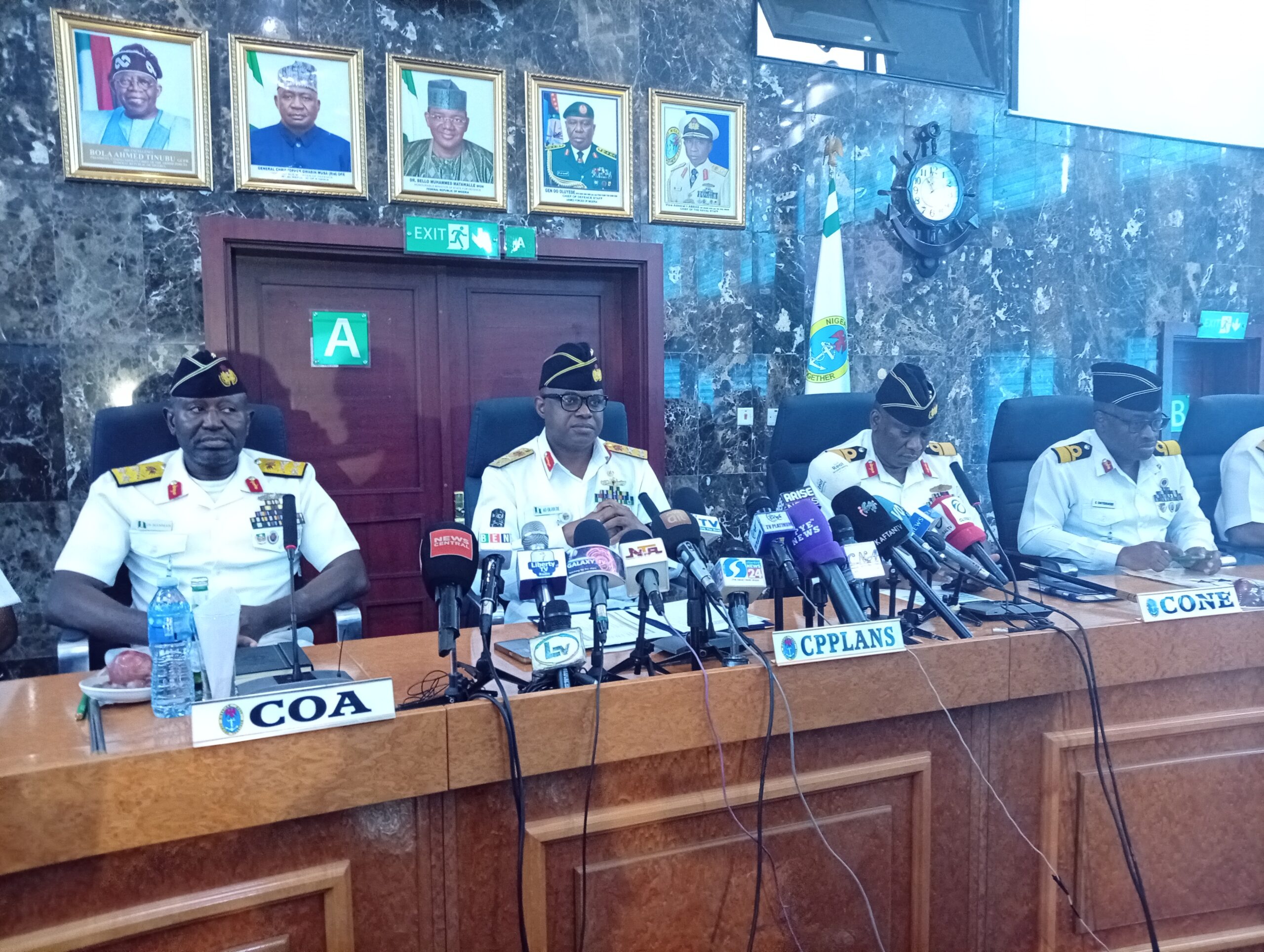
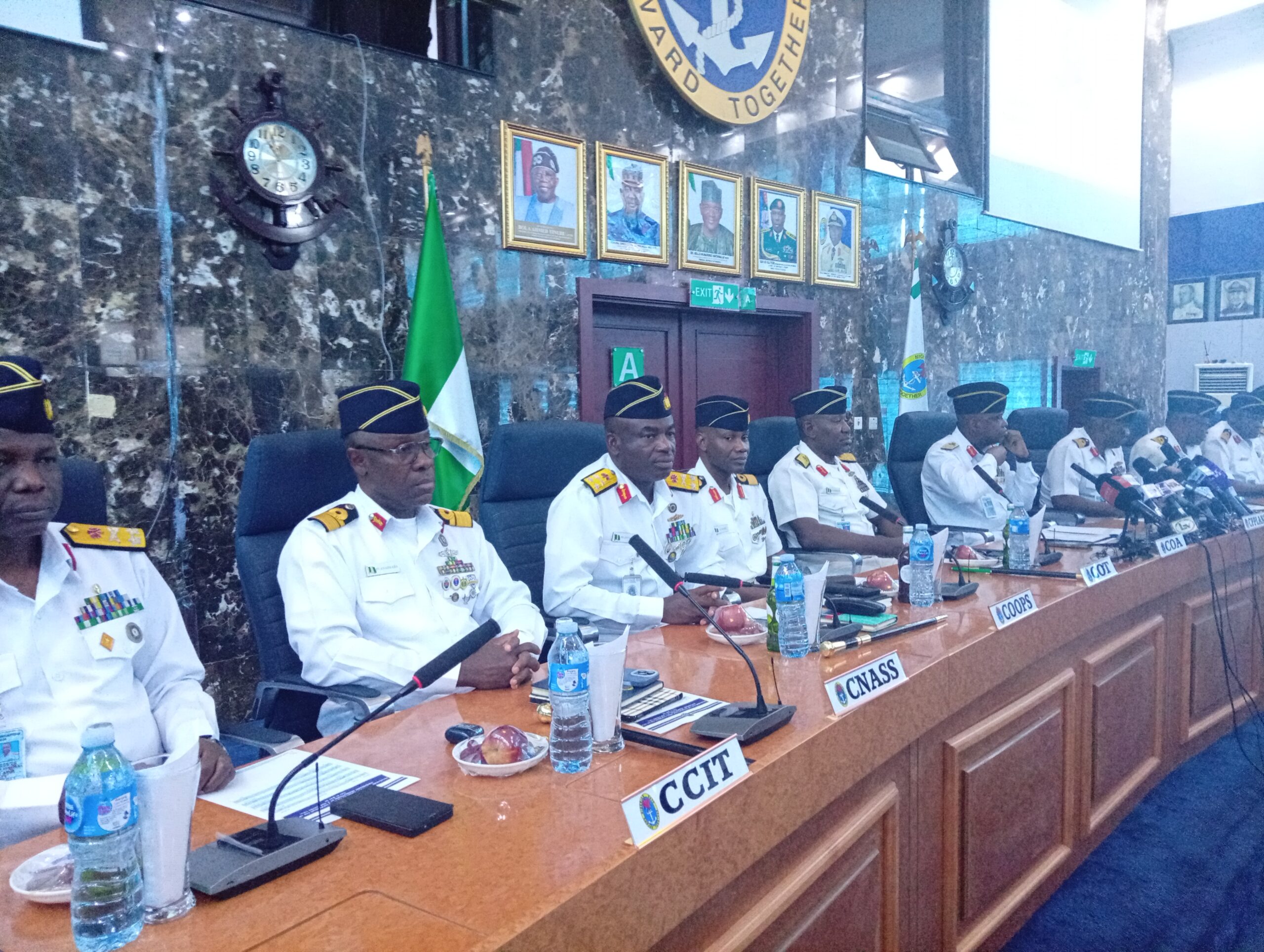
The press briefing officially heralded the commencement of activities lined up for the Nigerian Navy’s 70th Anniversary celebrations scheduled to hold in Lagos and across naval commands and formations nationwide.
Rear Admiral Olutunde explained that the platinum jubilee mark a major moment of reflection on the Navy’s historic journey, operational milestones and contributions to national unity, regional stability and maritime security across Africa.
He noted that the anniversary activities would run through June 4, 2026, featuring events across Lagos and all naval formations nationwide as part of a coordinated programme to showcase the Service’s achievements and future outlook.
Tracing its history, he stated that the Nigerian Navy was established on June 1, 1956, as the Naval Defence Force with 250 personnel and 11 vessels inherited from the colonial Marine Department of the Royal Navy.
He added that it later became the Royal Nigerian Navy in 1958 before the “Royal” prefix was dropped in 1963 following Nigeria’s transition to a republic, while the modern Nigerian Navy was formally established under Act No. 21 of Parliament in 1964 as a statutory arm of the Armed Forces of Nigeria.
Rear Admiral Olutunde further noted that Commodore J.E.A. Wey became the first Nigerian to head the Service in 1964, later serving as Chief of the Naval Staff and retiring as a Vice Admiral in 1973.
He said the Navy has evolved from a modest coastal force into a blue-water navy with growing regional influence, modern fleet capacity and expanding indigenous shipbuilding capability.
He recalled its role during the Nigerian Civil War (1967–1970), where it conducted maritime blockades, disrupted hostile supply routes, secured sea lines of communication and supported amphibious operations that contributed to national unity.
Beyond domestic operations, he highlighted Nigeria’s participation in international peace support missions, including the United Nations Interim Force in Lebanon in the 1970s, where naval assets supported logistics and troop sustainment operations.
He also referenced the Navy’s key role in ECOMOG operations in Liberia (1990–1999), where it provided maritime embargo enforcement, naval gunfire support, humanitarian evacuation and strategic sealift operations, as well as its contributions in Sierra Leone (1997–2000) in enforcing sanctions and securing maritime logistics routes.
Rear Admiral Olutunde further noted participation in the ECOWAS Mission in The Gambia in 2017, where the Nigerian Navy Special Boat Service and offshore patrol vessels supported the restoration of constitutional order.
In 2022, he said the Navy demonstrated strategic sealift capability during the ECOWAS Stabilisation Mission in Guinea-Bissau by transporting troops and military equipment following political instability.
He explained that these regional engagements contributed to the signing of a Strategic Sea Lift Memorandum of Understanding between Nigeria and the African Union in 2025, aimed at enhancing continental peacekeeping, disaster response and mobility operations.
On maritime security, he stated that sustained anti-piracy operations had ensured Nigeria’s removal from the International Maritime Bureau’s piracy-prone nations list since 2022, improving maritime safety, trade flow and insurance costs in the Gulf of Guinea.
Rear Admiral Olutunde also highlighted hydrographic achievements, including the charting of key waterways such as Lagos Harbour, Calabar Channel and Ibaka, which have enhanced safe navigation and maritime commerce.
On indigenous shipbuilding, he disclosed that five vessels—including a ferry, a tugboat and three seaward defence boats—have been locally constructed since 2010.
He added that the Naval Shipyard Limited in Port Harcourt is currently constructing a 27-metre ferry for the Akwa Ibom State Government, while the Naval Dockyard Limited in Lagos is building two 44.2-metre seaward defence boats.
He further stated that the Naval Dockyard Limited has successfully refitted three warships for the Benin Republic Navy between 2024 and 2025, with additional vessels currently under construction.
The Navy also reaffirmed its active involvement in joint internal security, counterterrorism and counter-insurgency operations nationwide alongside sister services and other security agencies.
Particular commendation was given to the Nigerian Navy Special Boat Service for its role in high-risk operations across the country.
Rear Admiral Olutunde further said the Service remains committed to combating crude oil theft and illegal refining in the Niger Delta, noting that these efforts have contributed to increased crude oil production from about 1.258 million barrels per day in January 2023 to approximately 1.71 million barrels per day as of April 2026, according to NNPC Limited figures.
He added that the 2026 Global Firepower Report ranked the Nigerian Navy as the strongest naval fleet in Africa, reflecting ongoing fleet modernization and recapitalisation efforts.
As part of anniversary activities, he announced programmes including special Jumat prayers nationwide, interdenominational church services, novelty sporting events such as shooting competitions and polo matches in Abuja, as well as a civilian sea experience programme involving 725 participants selected from over 14,000 applicants.
Other highlights include ship commissioning ceremonies, children-focused outreach programmes and the arrival of foreign naval vessels from countries including Benin Republic, Brazil, Cameroon, Côte d’Ivoire and Ghana.
He also disclosed that naval chiefs from 15 African countries, alongside representatives of international organisations, are expected to attend the celebrations.
A major highlight will be the International Fleet Review scheduled for June 1, 2026, at the Eko Atlantic Waterfront in Lagos, to be reviewed by President Bola Ahmed Tinubu, who is expected to present new colours to the Nigerian Navy and commission three vessels.
The President will also formally inaugurate a Combined Maritime Task Force for the Gulf of Guinea under the African Union Peace and Security Council, comprising Nigeria, Ghana, Liberia, Sierra Leone and The Gambia.
The celebrations will further feature the Sixth Sea Power for Africa Symposium scheduled for June 2–3, themed “Leveraging Technology For Enhanced Maritime Security In Africa,” focusing on emerging maritime threats and technological innovation.
Rear Admiral Olutunde reaffirmed the Navy’s commitment to evolving into a technologically advanced blue-water navy capable of safeguarding Nigeria’s maritime interests and contributing to regional and continental security, while calling for continued public and media support.