

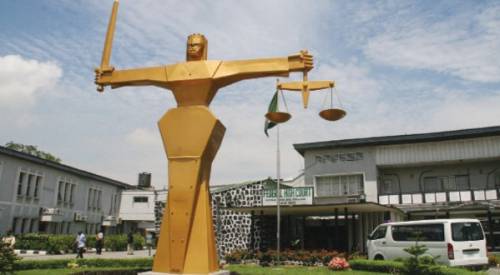
A landmark ruling by the National Industrial Court of Nigeria has declared that the Corporate Affairs Commission (CAC) does not have the legal authority to register trade unions or organizations with objectives similar to those of trade unions. The court’s decision has significant ramifications for Nigeria’s labor relations, clarifying the distinction between trade unions and other types of organizations, and reinforcing the importance of adhering to the provisions of the Trade Union Act.
The judgment was coming at a time when labor unions, including the Motorcycle Operators Union of Nigeria (MOUN), have been embroiled in disputes regarding the legality of certain labour organizations, and the right of workers to freely associate. MOUN has used the ruling to highlight its ongoing legal battle with the Delta State Government over workers’ rights to unionize, as well as its opposition to the activities of groups it deems illegal.
The court’s decision categorically stated that the CAC is not empowered to register trade unions or any organization that operates with objectives similar to those of trade unions under the Companies and Allied Matters Act (CAMA). The ruling emphasized that the legal framework governing trade unions is clearly defined by the Trade Union Act, which superseded any provisions in CAMA when it comes to unions. As a result, any trade union-like organizations registered under CAMA are considered void, and their actions could face legal challenges.
This ruling is seen as a critical step in safeguarding the integrity of trade unions in Nigeria, ensuring that only those registered according to the Trade Union Act are legally recognized. The court’s judgment also clarified that any attempts by organizations to bypass these legal channels, by registering under CAMA, would not be valid under Nigerian law.
The Motorcycle Operators Union of Nigeria (MOUN), which has long advocated for the protection of workers’ rights and adherence to proper unionization processes, has welcomed the court’s ruling as a major victory for Nigerian workers. Comrade Julius Oghenevwegba Bobi, Deputy National President of MOUN, reacted strongly to the decision, stated that it aligned with the union’s efforts to combat illegal unions operating within the transport sector. Specifically, Bobi has called the ruling a “clear win” for their ongoing legal battle against what MOUN described as illegal organizations like the Commercial Motorcycle and Tricycle Operators Association (COMTOA).
“We have always maintained that unions must be registered in accordance with the law and that any attempt to circumvent the process through organizations like COMTOA undermines the rights of workers,” Bobi said. “This ruling supports our position that any union operating outside the Trade Union Act is not legally recognized, and it strengthens our fight for the legal recognition of MOUN as the legitimate representative of motorcycle operators in Nigeria.”
Bobi also pointed to the union’s ongoing legal case against the Delta State Government, which has been accused of obstructing workers’ rights to join MOUN. According to MOUN, the state government’s actions go against the stipulations of the Trade Unions Act, which mandates that membership in a union is compulsory for workers unless they formally opt out. MOUN is urging the authorities to ensure that these fundamental rights are respected, and to halt any further attempts to prevent workers from freely joining unions.
“We are currently in the courts over similar issues with the Delta State Government, and this ruling provides much-needed legal reinforcement to our case. It strengthens our argument that workers’ rights to organize cannot be infringed upon by any employer or government body,” Bobi added.
The judgment by the National Industrial Court is set to have wide-ranging implications for the way trade unions operate in Nigeria. The ruling has drawn attention to the need for more robust enforcement of labor laws, particularly those that govern the registration and legitimacy of trade unions. It raises important questions about organizations that have not followed the proper legal framework, such as COMTOA, which MOUN has consistently challenged in the courts.
This case also underscored the growing tension between legitimate unions and entities that may be trying to circumvent the law. It is expected that the court’s ruling will prompt further legal scrutiny of other unions and labor organizations that operate outside the statutory frameworks laid out by the Trade Union Act.
For unions like MOUN, the judgment reinforced their position that the law must be upheld and that any organization claiming to represent workers must do so in full compliance with the legal framework governing trade unions in Nigeria.
As Nigeria’s labor laws continue to evolve, the recent ruling by the National Industrial Court marks a pivotal moment in the country’s ongoing labor disputes. MOUN, with its ongoing legal case against the Delta State Government and its efforts to dismantle illegal unions in the transport sector, has gained a crucial legal victory that strengthens its efforts to secure the rights of Nigerian workers.
As the battle for workers’ rights intensified, this judgment serves as an important reminder that the law must be followed, and that any attempts to undermine workers’ right to freely associate and unionize will be met with strong legal opposition.