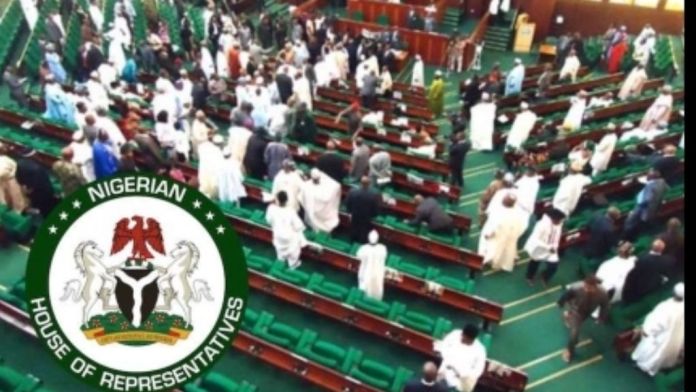
The House of Representatives has responded to recent concerns raised by its Minority Caucus over the country’s security situation, stressed that addressing insecurity required collective action and practical legislative interventions rather than public commentary alone.
In a statement issued on Friday in Abuja by the House Spokesman, Rep. Akintunde Rotimi Jr., the House acknowledged that security remained one of Nigeria’s most pressing national challenges and noted that the concerns expressed by the Minority Caucus reflected widespread public anxieties about safety and stability across the country.
The House, however, emphasized that Nigeria’s security challenges have evolved over many years and cannot be resolved through isolated efforts. It highlighted the role of the National Assembly in strengthening the nation’s security architecture through legislation, appropriation, oversight functions, and support for operational agencies.
According to the statement, ongoing interventions by security agencies have yielded measurable outcomes in several parts of the country, including the disruption of criminal networks, rescue of abducted persons, and efforts aimed at stabilizing vulnerable communities. While acknowledging that challenges persist, the House maintained that these gains demonstrate progress that should be sustained and strengthened.
The lawmakers further argued that discussions on security should be balanced and take into account both the setbacks and improvements recorded over time, stressing that objective assessments are essential for identifying gaps and improving existing strategies.
Addressing the concerns raised by the Minority Caucus, the House reminded its members that legislators possess constitutional instruments for influencing security outcomes, including bills, motions, committee oversight powers, appropriation responsibilities, and constituency engagement mechanisms.
It noted that members of the Minority Caucus, as part of the legislative arm of government, share responsibility for advancing solutions to national security challenges.
“The obligation to offer solutions, strengthen institutions, and support effective policy implementation is a shared one, not one divided along caucus lines,” the statement said.
The House also distinguished the role of lawmakers from that of civil society organisations, noting that while advocacy remains important, legislators operate within the formal framework of government decision-making and therefore have direct avenues for shaping policy and reforms.
It urged all members, regardless of political affiliation, to continue translating public concerns into actionable legislative proposals that can be debated and implemented for the benefit of Nigerians.
Speaking on the issue, House Leader, Rt. Hon. Julius Ihonvbere, stated that security transcends political considerations and requires a united national response.
“Security remains a shared national responsibility that transcends political affiliation. Our duty as Parliament is not only to express concern but to ensure such concerns are translated into effective legislative and oversight actions that strengthen national security,” he said.
Ihonvbere added that the strength of the House lies in its ability to pursue common goals despite differing political perspectives, noting that both majority and minority lawmakers are bound by the same constitutional obligation to serve the Nigerian people.
The House reiterated its commitment to working with the Executive, security agencies, state governments, and other stakeholders to improve security outcomes nationwide.
It maintained that overcoming the country’s security challenges would require sustained investment, stronger institutions, effective inter-agency collaboration, and collective national resolve, assuring Nigerians of its continued dedication to advancing policies and reforms aimed at safeguarding lives and property.